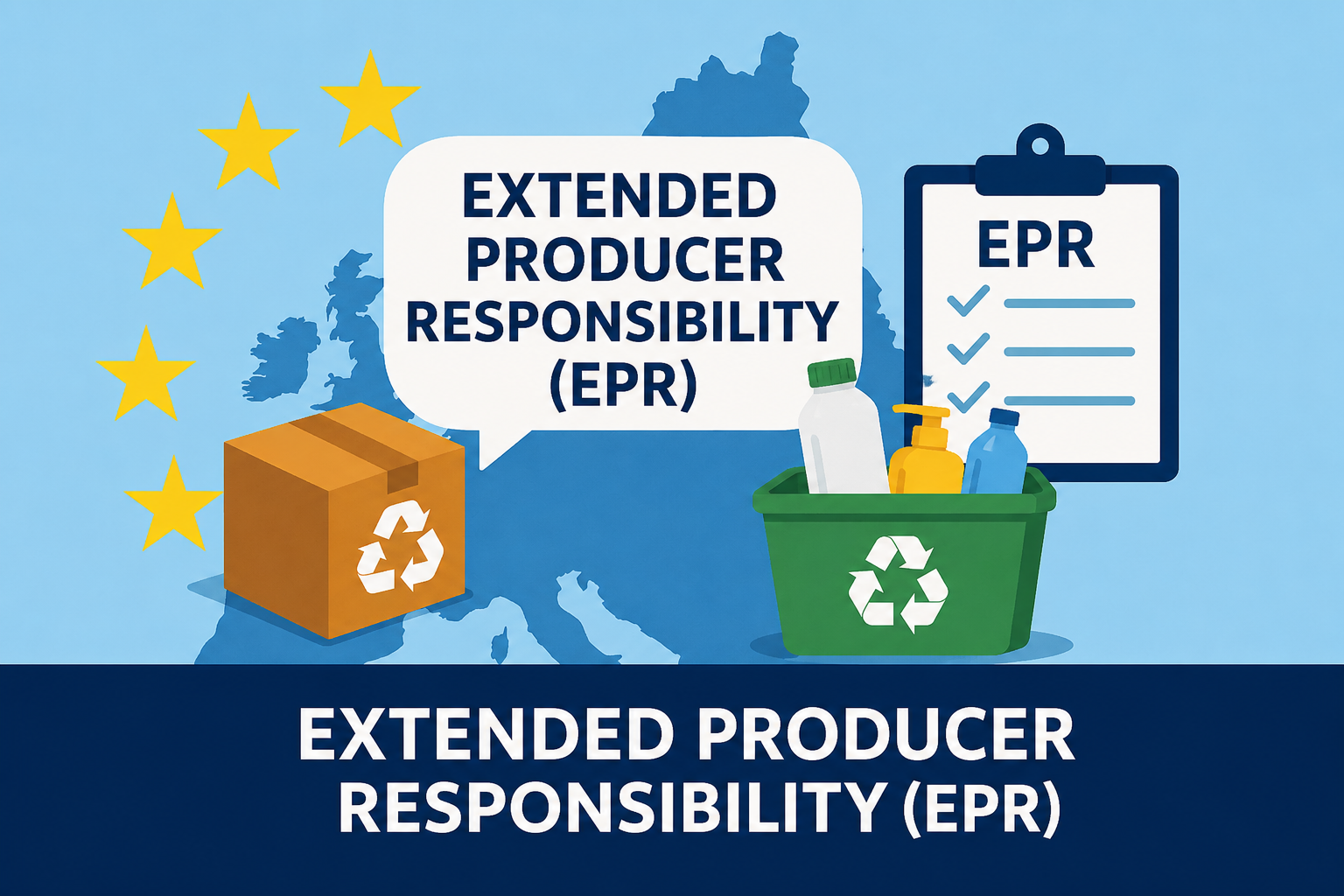
What is Extended Producer Responsibility (EPR)?
Extended Producer Reliability (EPR) is a new regulatory mandate making sure we manage how, what we produce is circulated across the economy. EPR is about fundamentally reducing resource use and maximising resource value over time, not just simply recycling materials.
At VAT Digital, we offer the fastest, stress-free Extended Producer Reliability (EPR) solution to keep your business compliant in the EU and beyond. Our transparent, fixed pricing makes us the most trusted provider. So your listings never get suspended.
Why Does the Regulation Matter?
It matters because packaging, batteries, and household electrical waste is devastating for the environment and landfill can’t keep expanding. The world’s recycling infrastructure needs time to grow so in the meantime, the less we pump into it the better off it will be. This mandatory regulation is making it obligatory for sellers to re-think their waste management schemes.
Do I Need to Bother with EPR?
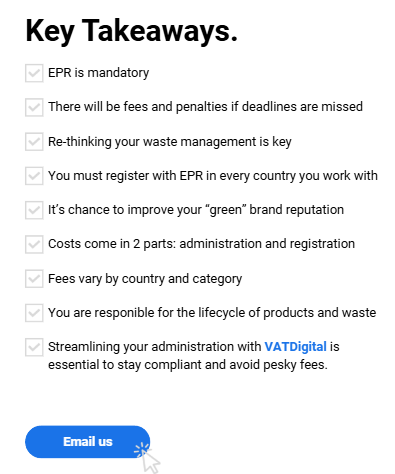
Yes, absolutely, EPR is mandatory if you are selling in the EU or the UK, with its main aim being to reduce waste; essentially holding businesses responsible for all the excess waste they put out into the world. This new trading requirement means that sellers who ignore it; risk losing access to their largest sales channels overnight. It’s a brand new cost that businesses will incur which has been put in place with the hope of reducing the environmental footprint of businesses in order to protect our planet. It’s not just about recycling, it’s about putting less into the economy, meaning that in the end we have less to dispose of. Extended Producer Reliability (EPR) means that businesses must take responsibility of the lifecycle of the product beyond the point of sale preventing household electronics, batteries and packaging becoming waste.
So, if you sell physical goods into a country, you are legally required to register with that country’s EPR scheme and pay fees that fund its recycling and waste systems. Extended Producer Reliability (EPR) covers categories such as waste packaging, electrical and electronic equipment (WEEE), and batteries. For e-commerce sellers, it means you must be registered in each country you sell into before you start shipping there.
Who Will Benefit?
Many stakeholders will benefit from this new regulatory mandate, such as: packaging companies, local authorities, waste management businesses, tax payers and households… But the biggest winner will be the impact on the planet. In 2026. The circular economy is shifting from voluntary sustainability goals to strict regulatory mandates and Extended Producer Reliability (EPR) is just the beginning. Currently the recovery rate for WEEE products is at 30-37% (source: business waste), and since 2016 household WEEE has increased by 0.6% and is at its highest level in the last 5 years (source: material focus). So by introducing EPR as a new regulatory mandate we are shifting the gap between consumer and seller adopting a “polluter pays” policy (source: keep Britain tidy). Meaning that for the first time ever, those responsible for the pollution are made to pay for it, taking on the full cost of the products’ life cycle beyond the point of sale. With this in mind, we are protecting the planet from further contamination and reducing our carbon footprint on the world.
The waste fee is a brand-new cost for businesses and removes the bill from the tax payers pocket. Hopefully with this in mind; businesses will reduce and remove the use of any poorly designed and unnecessary packaging or components from their products meaning that less waste will enter the world.
Let’s take batteries as an example. If they are not disposed of correctly, they can cause fires at local waste stations, pollute our soil and water and surprisingly enough, despite them being of no use to us, they actually contain reusable raw materials. So, if we dispose of such objects in an efficient manner, it’s a win-win situation, the planet is saved from dangerous toxins and we get to save and reuse raw materials for future products. We can say thanks to EPR!
So by one strict regulatory mandate put in place: Extended Producer Reliability (EPR) , we are encouraging a circular economy and helping to keep the world waste free and encourage a cleaner space for generations to come.
What’s the Cost of Registering for Extended Producer Reliability (EPR)?
EPR costs come in two parts: the registration and administration of each scheme, and the eco-contribution fees are based on the volume and type of material you place on each market. Fees vary widely by country and category. Packaging is charged by weight and material, while WEEE and batteries are charged by unit or weight; so there’s no single flat figure. The key point for sellers is that costs scale with how many countries and categories you’re in, which makes accurate reporting essential to avoid overpaying. We offer transparent fixed pricing for managing business registrations and filings, so the administration cost is predictable even as the underlying fees vary.
Using VAT Digital will enable you to be compliant and avoid penalties because the process, language, and reporting cycles differ in every country. So by choosing to work with us, we can handle all of your registrations and filings centrally rather than managing dozens of separate national systems and the complexities that come with them.
Will There be Fees and Penalties?
Yes. But essentially if businesses don’t take Extended Producer Reliability (EPR) into consideration there will be heavy sanctions and non-compliance can lead to fines, sales restrictions, and reputational damage.
Can I Pay Directly Through my Marketplace app?
Yes, some marketplaces offer a pay on your behalf (POB) scheme. But essentially, if you can’t provide a valid number, the marketplace can suspend or remove your listings in that country until you become compliant. This moved EPR from a “nice to have” into a trading requirement — sellers who ignore it risk losing access to their largest sales channels overnight.
Download our brand booklet about EPR.